Represents a collection of functions to interact with the API endpoints More...
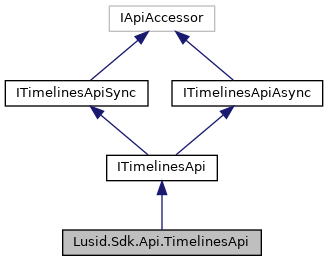
Public Member Functions | |
| TimelinesApi () | |
| Initializes a new instance of the TimelinesApi class. More... | |
| TimelinesApi (string basePath) | |
| Initializes a new instance of the TimelinesApi class. More... | |
| TimelinesApi (Lusid.Sdk.Client.Configuration configuration) | |
| Initializes a new instance of the TimelinesApi class using Configuration object More... | |
| TimelinesApi (Lusid.Sdk.Client.ISynchronousClient client, Lusid.Sdk.Client.IAsynchronousClient asyncClient, Lusid.Sdk.Client.IReadableConfiguration configuration) | |
| Initializes a new instance of the TimelinesApi class using a Configuration object and client instance. More... | |
| string | GetBasePath () |
| Gets the base path of the API client. More... | |
| ClosedPeriod | ConfirmClosedPeriod (string scope, string code, string closedPeriodId, Object? body=default(Object?), int operationIndex=0, ConfigurationOptions? opts=null) |
| [EXPERIMENTAL] ConfirmClosedPeriod: Confirm a Closed Period against a Timeline Entity Confirms a Closed Period against a Timeline Entity. Deletes any other unconfirmed Closed Periods on the Timeline. More... | |
| Lusid.Sdk.Client.ApiResponse< ClosedPeriod > | ConfirmClosedPeriodWithHttpInfo (string scope, string code, string closedPeriodId, Object? body=default(Object?), int operationIndex=0, ConfigurationOptions? opts=null) |
| [EXPERIMENTAL] ConfirmClosedPeriod: Confirm a Closed Period against a Timeline Entity Confirms a Closed Period against a Timeline Entity. Deletes any other unconfirmed Closed Periods on the Timeline. More... | |
| async System.Threading.Tasks.Task< ClosedPeriod > | ConfirmClosedPeriodAsync (string scope, string code, string closedPeriodId, Object? body=default(Object?), int operationIndex=0, System.Threading.CancellationToken cancellationToken=default(System.Threading.CancellationToken), ConfigurationOptions? opts=null) |
| [EXPERIMENTAL] ConfirmClosedPeriod: Confirm a Closed Period against a Timeline Entity Confirms a Closed Period against a Timeline Entity. Deletes any other unconfirmed Closed Periods on the Timeline. More... | |
| async System.Threading.Tasks.Task< Lusid.Sdk.Client.ApiResponse< ClosedPeriod > > | ConfirmClosedPeriodWithHttpInfoAsync (string scope, string code, string closedPeriodId, Object? body=default(Object?), int operationIndex=0, System.Threading.CancellationToken cancellationToken=default(System.Threading.CancellationToken), ConfigurationOptions? opts=null) |
| [EXPERIMENTAL] ConfirmClosedPeriod: Confirm a Closed Period against a Timeline Entity Confirms a Closed Period against a Timeline Entity. Deletes any other unconfirmed Closed Periods on the Timeline. More... | |
| ClosedPeriod | CreateClosedPeriod (string scope, string code, CreateClosedPeriodRequest? createClosedPeriodRequest=default(CreateClosedPeriodRequest?), int operationIndex=0, ConfigurationOptions? opts=null) |
| [EXPERIMENTAL] CreateClosedPeriod: Create a new closed period against a timeline entity Creates a new closed period against a timeline entity Returns the newly created closed period entity with properties More... | |
| Lusid.Sdk.Client.ApiResponse< ClosedPeriod > | CreateClosedPeriodWithHttpInfo (string scope, string code, CreateClosedPeriodRequest? createClosedPeriodRequest=default(CreateClosedPeriodRequest?), int operationIndex=0, ConfigurationOptions? opts=null) |
| [EXPERIMENTAL] CreateClosedPeriod: Create a new closed period against a timeline entity Creates a new closed period against a timeline entity Returns the newly created closed period entity with properties More... | |
| async System.Threading.Tasks.Task< ClosedPeriod > | CreateClosedPeriodAsync (string scope, string code, CreateClosedPeriodRequest? createClosedPeriodRequest=default(CreateClosedPeriodRequest?), int operationIndex=0, System.Threading.CancellationToken cancellationToken=default(System.Threading.CancellationToken), ConfigurationOptions? opts=null) |
| [EXPERIMENTAL] CreateClosedPeriod: Create a new closed period against a timeline entity Creates a new closed period against a timeline entity Returns the newly created closed period entity with properties More... | |
| async System.Threading.Tasks.Task< Lusid.Sdk.Client.ApiResponse< ClosedPeriod > > | CreateClosedPeriodWithHttpInfoAsync (string scope, string code, CreateClosedPeriodRequest? createClosedPeriodRequest=default(CreateClosedPeriodRequest?), int operationIndex=0, System.Threading.CancellationToken cancellationToken=default(System.Threading.CancellationToken), ConfigurationOptions? opts=null) |
| [EXPERIMENTAL] CreateClosedPeriod: Create a new closed period against a timeline entity Creates a new closed period against a timeline entity Returns the newly created closed period entity with properties More... | |
| ClosedPeriod | CreateClosedPeriodCandidate (string scope, string code, CreateClosedPeriodRequest? createClosedPeriodRequest=default(CreateClosedPeriodRequest?), int operationIndex=0, ConfigurationOptions? opts=null) |
| [EXPERIMENTAL] CreateClosedPeriodCandidate: Create a new closed period candidate against a timeline entity Creates a new closed period candidate against a timeline entity Returns the newly created closed period candidate entity with properties More... | |
| Lusid.Sdk.Client.ApiResponse< ClosedPeriod > | CreateClosedPeriodCandidateWithHttpInfo (string scope, string code, CreateClosedPeriodRequest? createClosedPeriodRequest=default(CreateClosedPeriodRequest?), int operationIndex=0, ConfigurationOptions? opts=null) |
| [EXPERIMENTAL] CreateClosedPeriodCandidate: Create a new closed period candidate against a timeline entity Creates a new closed period candidate against a timeline entity Returns the newly created closed period candidate entity with properties More... | |
| async System.Threading.Tasks.Task< ClosedPeriod > | CreateClosedPeriodCandidateAsync (string scope, string code, CreateClosedPeriodRequest? createClosedPeriodRequest=default(CreateClosedPeriodRequest?), int operationIndex=0, System.Threading.CancellationToken cancellationToken=default(System.Threading.CancellationToken), ConfigurationOptions? opts=null) |
| [EXPERIMENTAL] CreateClosedPeriodCandidate: Create a new closed period candidate against a timeline entity Creates a new closed period candidate against a timeline entity Returns the newly created closed period candidate entity with properties More... | |
| async System.Threading.Tasks.Task< Lusid.Sdk.Client.ApiResponse< ClosedPeriod > > | CreateClosedPeriodCandidateWithHttpInfoAsync (string scope, string code, CreateClosedPeriodRequest? createClosedPeriodRequest=default(CreateClosedPeriodRequest?), int operationIndex=0, System.Threading.CancellationToken cancellationToken=default(System.Threading.CancellationToken), ConfigurationOptions? opts=null) |
| [EXPERIMENTAL] CreateClosedPeriodCandidate: Create a new closed period candidate against a timeline entity Creates a new closed period candidate against a timeline entity Returns the newly created closed period candidate entity with properties More... | |
| Timeline | CreateTimeline (CreateTimelineRequest? createTimelineRequest=default(CreateTimelineRequest?), int operationIndex=0, ConfigurationOptions? opts=null) |
| [EXPERIMENTAL] CreateTimeline: Create a Timeline Creates a Timeline. Returns the created Timeline at the current effectiveAt. Note that Timelines are mono-temporal, however they can have Time-Variant Properties. Upserted Properties will be returned at the latest AsAt and EffectiveAt More... | |
| Lusid.Sdk.Client.ApiResponse< Timeline > | CreateTimelineWithHttpInfo (CreateTimelineRequest? createTimelineRequest=default(CreateTimelineRequest?), int operationIndex=0, ConfigurationOptions? opts=null) |
| [EXPERIMENTAL] CreateTimeline: Create a Timeline Creates a Timeline. Returns the created Timeline at the current effectiveAt. Note that Timelines are mono-temporal, however they can have Time-Variant Properties. Upserted Properties will be returned at the latest AsAt and EffectiveAt More... | |
| async System.Threading.Tasks.Task< Timeline > | CreateTimelineAsync (CreateTimelineRequest? createTimelineRequest=default(CreateTimelineRequest?), int operationIndex=0, System.Threading.CancellationToken cancellationToken=default(System.Threading.CancellationToken), ConfigurationOptions? opts=null) |
| [EXPERIMENTAL] CreateTimeline: Create a Timeline Creates a Timeline. Returns the created Timeline at the current effectiveAt. Note that Timelines are mono-temporal, however they can have Time-Variant Properties. Upserted Properties will be returned at the latest AsAt and EffectiveAt More... | |
| async System.Threading.Tasks.Task< Lusid.Sdk.Client.ApiResponse< Timeline > > | CreateTimelineWithHttpInfoAsync (CreateTimelineRequest? createTimelineRequest=default(CreateTimelineRequest?), int operationIndex=0, System.Threading.CancellationToken cancellationToken=default(System.Threading.CancellationToken), ConfigurationOptions? opts=null) |
| [EXPERIMENTAL] CreateTimeline: Create a Timeline Creates a Timeline. Returns the created Timeline at the current effectiveAt. Note that Timelines are mono-temporal, however they can have Time-Variant Properties. Upserted Properties will be returned at the latest AsAt and EffectiveAt More... | |
| DeletedEntityResponse | DeleteTimeline (string scope, string code, int operationIndex=0, ConfigurationOptions? opts=null) |
| [EXPERIMENTAL] DeleteTimeline: Deletes a particular Timeline The deletion will take effect from the Timeline deletion datetime. i.e. will no longer exist at any asAt datetime after the asAt datetime of deletion. More... | |
| Lusid.Sdk.Client.ApiResponse< DeletedEntityResponse > | DeleteTimelineWithHttpInfo (string scope, string code, int operationIndex=0, ConfigurationOptions? opts=null) |
| [EXPERIMENTAL] DeleteTimeline: Deletes a particular Timeline The deletion will take effect from the Timeline deletion datetime. i.e. will no longer exist at any asAt datetime after the asAt datetime of deletion. More... | |
| async System.Threading.Tasks.Task< DeletedEntityResponse > | DeleteTimelineAsync (string scope, string code, int operationIndex=0, System.Threading.CancellationToken cancellationToken=default(System.Threading.CancellationToken), ConfigurationOptions? opts=null) |
| [EXPERIMENTAL] DeleteTimeline: Deletes a particular Timeline The deletion will take effect from the Timeline deletion datetime. i.e. will no longer exist at any asAt datetime after the asAt datetime of deletion. More... | |
| async System.Threading.Tasks.Task< Lusid.Sdk.Client.ApiResponse< DeletedEntityResponse > > | DeleteTimelineWithHttpInfoAsync (string scope, string code, int operationIndex=0, System.Threading.CancellationToken cancellationToken=default(System.Threading.CancellationToken), ConfigurationOptions? opts=null) |
| [EXPERIMENTAL] DeleteTimeline: Deletes a particular Timeline The deletion will take effect from the Timeline deletion datetime. i.e. will no longer exist at any asAt datetime after the asAt datetime of deletion. More... | |
| ClosedPeriod | GetClosedPeriod (string scope, string code, string closedPeriodId, DateTimeOffset? asAt=default(DateTimeOffset?), List< string >? propertyKeys=default(List< string >?), int operationIndex=0, ConfigurationOptions? opts=null) |
| [EXPERIMENTAL] GetClosedPeriod: Gets a Closed Period entity. Retrieves one ClosedPeriod uniquely defined by the Timelines Scope/Code and a ClosedPeriodId. More... | |
| Lusid.Sdk.Client.ApiResponse< ClosedPeriod > | GetClosedPeriodWithHttpInfo (string scope, string code, string closedPeriodId, DateTimeOffset? asAt=default(DateTimeOffset?), List< string >? propertyKeys=default(List< string >?), int operationIndex=0, ConfigurationOptions? opts=null) |
| [EXPERIMENTAL] GetClosedPeriod: Gets a Closed Period entity. Retrieves one ClosedPeriod uniquely defined by the Timelines Scope/Code and a ClosedPeriodId. More... | |
| async System.Threading.Tasks.Task< ClosedPeriod > | GetClosedPeriodAsync (string scope, string code, string closedPeriodId, DateTimeOffset? asAt=default(DateTimeOffset?), List< string >? propertyKeys=default(List< string >?), int operationIndex=0, System.Threading.CancellationToken cancellationToken=default(System.Threading.CancellationToken), ConfigurationOptions? opts=null) |
| [EXPERIMENTAL] GetClosedPeriod: Gets a Closed Period entity. Retrieves one ClosedPeriod uniquely defined by the Timelines Scope/Code and a ClosedPeriodId. More... | |
| async System.Threading.Tasks.Task< Lusid.Sdk.Client.ApiResponse< ClosedPeriod > > | GetClosedPeriodWithHttpInfoAsync (string scope, string code, string closedPeriodId, DateTimeOffset? asAt=default(DateTimeOffset?), List< string >? propertyKeys=default(List< string >?), int operationIndex=0, System.Threading.CancellationToken cancellationToken=default(System.Threading.CancellationToken), ConfigurationOptions? opts=null) |
| [EXPERIMENTAL] GetClosedPeriod: Gets a Closed Period entity. Retrieves one ClosedPeriod uniquely defined by the Timelines Scope/Code and a ClosedPeriodId. More... | |
| Timeline | GetTimeline (string scope, string code, DateTimeOffset? asAt=default(DateTimeOffset?), DateTimeOrCutLabel? effectiveAt=default(DateTimeOrCutLabel?), List< string >? propertyKeys=default(List< string >?), int operationIndex=0, ConfigurationOptions? opts=null) |
| [EXPERIMENTAL] GetTimeline: Get a single Timeline by scope and code. Retrieves one Timeline by scope and code. Timelines are mono-temporal. The EffectiveAt is only applied to Time-Variant Properties. More... | |
| Lusid.Sdk.Client.ApiResponse< Timeline > | GetTimelineWithHttpInfo (string scope, string code, DateTimeOffset? asAt=default(DateTimeOffset?), DateTimeOrCutLabel? effectiveAt=default(DateTimeOrCutLabel?), List< string >? propertyKeys=default(List< string >?), int operationIndex=0, ConfigurationOptions? opts=null) |
| [EXPERIMENTAL] GetTimeline: Get a single Timeline by scope and code. Retrieves one Timeline by scope and code. Timelines are mono-temporal. The EffectiveAt is only applied to Time-Variant Properties. More... | |
| async System.Threading.Tasks.Task< Timeline > | GetTimelineAsync (string scope, string code, DateTimeOffset? asAt=default(DateTimeOffset?), DateTimeOrCutLabel? effectiveAt=default(DateTimeOrCutLabel?), List< string >? propertyKeys=default(List< string >?), int operationIndex=0, System.Threading.CancellationToken cancellationToken=default(System.Threading.CancellationToken), ConfigurationOptions? opts=null) |
| [EXPERIMENTAL] GetTimeline: Get a single Timeline by scope and code. Retrieves one Timeline by scope and code. Timelines are mono-temporal. The EffectiveAt is only applied to Time-Variant Properties. More... | |
| async System.Threading.Tasks.Task< Lusid.Sdk.Client.ApiResponse< Timeline > > | GetTimelineWithHttpInfoAsync (string scope, string code, DateTimeOffset? asAt=default(DateTimeOffset?), DateTimeOrCutLabel? effectiveAt=default(DateTimeOrCutLabel?), List< string >? propertyKeys=default(List< string >?), int operationIndex=0, System.Threading.CancellationToken cancellationToken=default(System.Threading.CancellationToken), ConfigurationOptions? opts=null) |
| [EXPERIMENTAL] GetTimeline: Get a single Timeline by scope and code. Retrieves one Timeline by scope and code. Timelines are mono-temporal. The EffectiveAt is only applied to Time-Variant Properties. More... | |
| PagedResourceListOfClosedPeriod | ListClosedPeriods (string scope, string code, DateTimeOffset? asAt=default(DateTimeOffset?), string? page=default(string?), int? limit=default(int?), string? filter=default(string?), List< string >? sortBy=default(List< string >?), List< string >? propertyKeys=default(List< string >?), int operationIndex=0, ConfigurationOptions? opts=null) |
| [EXPERIMENTAL] ListClosedPeriods: List ClosedPeriods for a specified Timeline. List all the ClosedPeriods matching a particular criteria. More... | |
| Lusid.Sdk.Client.ApiResponse< PagedResourceListOfClosedPeriod > | ListClosedPeriodsWithHttpInfo (string scope, string code, DateTimeOffset? asAt=default(DateTimeOffset?), string? page=default(string?), int? limit=default(int?), string? filter=default(string?), List< string >? sortBy=default(List< string >?), List< string >? propertyKeys=default(List< string >?), int operationIndex=0, ConfigurationOptions? opts=null) |
| [EXPERIMENTAL] ListClosedPeriods: List ClosedPeriods for a specified Timeline. List all the ClosedPeriods matching a particular criteria. More... | |
| async System.Threading.Tasks.Task< PagedResourceListOfClosedPeriod > | ListClosedPeriodsAsync (string scope, string code, DateTimeOffset? asAt=default(DateTimeOffset?), string? page=default(string?), int? limit=default(int?), string? filter=default(string?), List< string >? sortBy=default(List< string >?), List< string >? propertyKeys=default(List< string >?), int operationIndex=0, System.Threading.CancellationToken cancellationToken=default(System.Threading.CancellationToken), ConfigurationOptions? opts=null) |
| [EXPERIMENTAL] ListClosedPeriods: List ClosedPeriods for a specified Timeline. List all the ClosedPeriods matching a particular criteria. More... | |
| async System.Threading.Tasks.Task< Lusid.Sdk.Client.ApiResponse< PagedResourceListOfClosedPeriod > > | ListClosedPeriodsWithHttpInfoAsync (string scope, string code, DateTimeOffset? asAt=default(DateTimeOffset?), string? page=default(string?), int? limit=default(int?), string? filter=default(string?), List< string >? sortBy=default(List< string >?), List< string >? propertyKeys=default(List< string >?), int operationIndex=0, System.Threading.CancellationToken cancellationToken=default(System.Threading.CancellationToken), ConfigurationOptions? opts=null) |
| [EXPERIMENTAL] ListClosedPeriods: List ClosedPeriods for a specified Timeline. List all the ClosedPeriods matching a particular criteria. More... | |
| PagedResourceListOfTimeline | ListTimelines (DateTimeOffset? asAt=default(DateTimeOffset?), DateTimeOrCutLabel? effectiveAt=default(DateTimeOrCutLabel?), string? page=default(string?), int? limit=default(int?), string? filter=default(string?), List< string >? sortBy=default(List< string >?), List< string >? propertyKeys=default(List< string >?), int operationIndex=0, ConfigurationOptions? opts=null) |
| [EXPERIMENTAL] ListTimelines: List Timelines List all the Timelines matching a particular criteria. More... | |
| Lusid.Sdk.Client.ApiResponse< PagedResourceListOfTimeline > | ListTimelinesWithHttpInfo (DateTimeOffset? asAt=default(DateTimeOffset?), DateTimeOrCutLabel? effectiveAt=default(DateTimeOrCutLabel?), string? page=default(string?), int? limit=default(int?), string? filter=default(string?), List< string >? sortBy=default(List< string >?), List< string >? propertyKeys=default(List< string >?), int operationIndex=0, ConfigurationOptions? opts=null) |
| [EXPERIMENTAL] ListTimelines: List Timelines List all the Timelines matching a particular criteria. More... | |
| async System.Threading.Tasks.Task< PagedResourceListOfTimeline > | ListTimelinesAsync (DateTimeOffset? asAt=default(DateTimeOffset?), DateTimeOrCutLabel? effectiveAt=default(DateTimeOrCutLabel?), string? page=default(string?), int? limit=default(int?), string? filter=default(string?), List< string >? sortBy=default(List< string >?), List< string >? propertyKeys=default(List< string >?), int operationIndex=0, System.Threading.CancellationToken cancellationToken=default(System.Threading.CancellationToken), ConfigurationOptions? opts=null) |
| [EXPERIMENTAL] ListTimelines: List Timelines List all the Timelines matching a particular criteria. More... | |
| async System.Threading.Tasks.Task< Lusid.Sdk.Client.ApiResponse< PagedResourceListOfTimeline > > | ListTimelinesWithHttpInfoAsync (DateTimeOffset? asAt=default(DateTimeOffset?), DateTimeOrCutLabel? effectiveAt=default(DateTimeOrCutLabel?), string? page=default(string?), int? limit=default(int?), string? filter=default(string?), List< string >? sortBy=default(List< string >?), List< string >? propertyKeys=default(List< string >?), int operationIndex=0, System.Threading.CancellationToken cancellationToken=default(System.Threading.CancellationToken), ConfigurationOptions? opts=null) |
| [EXPERIMENTAL] ListTimelines: List Timelines List all the Timelines matching a particular criteria. More... | |
| ClosedPeriod | SetPostCloseActivity (string scope, string code, string closedPeriodId, PostCloseActivitiesRequest? postCloseActivitiesRequest=default(PostCloseActivitiesRequest?), int operationIndex=0, ConfigurationOptions? opts=null) |
| [EXPERIMENTAL] SetPostCloseActivity: Sets post-close activities to a Closed Period. This sets the given post-close activities to the given Closed Period. This is an overwriting action! The possible types of entity are: * `PortfolioTransaction`, * `Instrument`, * `InstrumentEvent`, * `InstrumentEventInstruction`, * `PortfolioSettlementInstruction`, and, * `Quote`. More... | |
| Lusid.Sdk.Client.ApiResponse< ClosedPeriod > | SetPostCloseActivityWithHttpInfo (string scope, string code, string closedPeriodId, PostCloseActivitiesRequest? postCloseActivitiesRequest=default(PostCloseActivitiesRequest?), int operationIndex=0, ConfigurationOptions? opts=null) |
| [EXPERIMENTAL] SetPostCloseActivity: Sets post-close activities to a Closed Period. This sets the given post-close activities to the given Closed Period. This is an overwriting action! The possible types of entity are: * `PortfolioTransaction`, * `Instrument`, * `InstrumentEvent`, * `InstrumentEventInstruction`, * `PortfolioSettlementInstruction`, and, * `Quote`. More... | |
| async System.Threading.Tasks.Task< ClosedPeriod > | SetPostCloseActivityAsync (string scope, string code, string closedPeriodId, PostCloseActivitiesRequest? postCloseActivitiesRequest=default(PostCloseActivitiesRequest?), int operationIndex=0, System.Threading.CancellationToken cancellationToken=default(System.Threading.CancellationToken), ConfigurationOptions? opts=null) |
| [EXPERIMENTAL] SetPostCloseActivity: Sets post-close activities to a Closed Period. This sets the given post-close activities to the given Closed Period. This is an overwriting action! The possible types of entity are: * `PortfolioTransaction`, * `Instrument`, * `InstrumentEvent`, * `InstrumentEventInstruction`, * `PortfolioSettlementInstruction`, and, * `Quote`. More... | |
| async System.Threading.Tasks.Task< Lusid.Sdk.Client.ApiResponse< ClosedPeriod > > | SetPostCloseActivityWithHttpInfoAsync (string scope, string code, string closedPeriodId, PostCloseActivitiesRequest? postCloseActivitiesRequest=default(PostCloseActivitiesRequest?), int operationIndex=0, System.Threading.CancellationToken cancellationToken=default(System.Threading.CancellationToken), ConfigurationOptions? opts=null) |
| [EXPERIMENTAL] SetPostCloseActivity: Sets post-close activities to a Closed Period. This sets the given post-close activities to the given Closed Period. This is an overwriting action! The possible types of entity are: * `PortfolioTransaction`, * `Instrument`, * `InstrumentEvent`, * `InstrumentEventInstruction`, * `PortfolioSettlementInstruction`, and, * `Quote`. More... | |
| ClosedPeriod | UnconfirmClosedPeriod (string scope, string code, string closedPeriodId, Object? body=default(Object?), int operationIndex=0, ConfigurationOptions? opts=null) |
| [EXPERIMENTAL] UnconfirmClosedPeriod: Unconfirm the last confirmed Closed Period against a Timeline Entity Unconfirm the last confirmed Closed Period against a Timeline Entity More... | |
| Lusid.Sdk.Client.ApiResponse< ClosedPeriod > | UnconfirmClosedPeriodWithHttpInfo (string scope, string code, string closedPeriodId, Object? body=default(Object?), int operationIndex=0, ConfigurationOptions? opts=null) |
| [EXPERIMENTAL] UnconfirmClosedPeriod: Unconfirm the last confirmed Closed Period against a Timeline Entity Unconfirm the last confirmed Closed Period against a Timeline Entity More... | |
| async System.Threading.Tasks.Task< ClosedPeriod > | UnconfirmClosedPeriodAsync (string scope, string code, string closedPeriodId, Object? body=default(Object?), int operationIndex=0, System.Threading.CancellationToken cancellationToken=default(System.Threading.CancellationToken), ConfigurationOptions? opts=null) |
| [EXPERIMENTAL] UnconfirmClosedPeriod: Unconfirm the last confirmed Closed Period against a Timeline Entity Unconfirm the last confirmed Closed Period against a Timeline Entity More... | |
| async System.Threading.Tasks.Task< Lusid.Sdk.Client.ApiResponse< ClosedPeriod > > | UnconfirmClosedPeriodWithHttpInfoAsync (string scope, string code, string closedPeriodId, Object? body=default(Object?), int operationIndex=0, System.Threading.CancellationToken cancellationToken=default(System.Threading.CancellationToken), ConfigurationOptions? opts=null) |
| [EXPERIMENTAL] UnconfirmClosedPeriod: Unconfirm the last confirmed Closed Period against a Timeline Entity Unconfirm the last confirmed Closed Period against a Timeline Entity More... | |
| Timeline | UpdateTimeline (string scope, string code, UpdateTimelineRequest? updateTimelineRequest=default(UpdateTimelineRequest?), int operationIndex=0, ConfigurationOptions? opts=null) |
| [EXPERIMENTAL] UpdateTimeline: Update Timeline defined by scope and code Overwrites an existing Timeline Update request has the same required fields as Create apart from the id. Returns the updated Timeline at the current effectiveAt. Note that Timelines are mono-temporal, however they can have Time-Variant Properties. Updated Properties will be returned at the latest AsAt and EffectiveAt More... | |
| Lusid.Sdk.Client.ApiResponse< Timeline > | UpdateTimelineWithHttpInfo (string scope, string code, UpdateTimelineRequest? updateTimelineRequest=default(UpdateTimelineRequest?), int operationIndex=0, ConfigurationOptions? opts=null) |
| [EXPERIMENTAL] UpdateTimeline: Update Timeline defined by scope and code Overwrites an existing Timeline Update request has the same required fields as Create apart from the id. Returns the updated Timeline at the current effectiveAt. Note that Timelines are mono-temporal, however they can have Time-Variant Properties. Updated Properties will be returned at the latest AsAt and EffectiveAt More... | |
| async System.Threading.Tasks.Task< Timeline > | UpdateTimelineAsync (string scope, string code, UpdateTimelineRequest? updateTimelineRequest=default(UpdateTimelineRequest?), int operationIndex=0, System.Threading.CancellationToken cancellationToken=default(System.Threading.CancellationToken), ConfigurationOptions? opts=null) |
| [EXPERIMENTAL] UpdateTimeline: Update Timeline defined by scope and code Overwrites an existing Timeline Update request has the same required fields as Create apart from the id. Returns the updated Timeline at the current effectiveAt. Note that Timelines are mono-temporal, however they can have Time-Variant Properties. Updated Properties will be returned at the latest AsAt and EffectiveAt More... | |
| async System.Threading.Tasks.Task< Lusid.Sdk.Client.ApiResponse< Timeline > > | UpdateTimelineWithHttpInfoAsync (string scope, string code, UpdateTimelineRequest? updateTimelineRequest=default(UpdateTimelineRequest?), int operationIndex=0, System.Threading.CancellationToken cancellationToken=default(System.Threading.CancellationToken), ConfigurationOptions? opts=null) |
| [EXPERIMENTAL] UpdateTimeline: Update Timeline defined by scope and code Overwrites an existing Timeline Update request has the same required fields as Create apart from the id. Returns the updated Timeline at the current effectiveAt. Note that Timelines are mono-temporal, however they can have Time-Variant Properties. Updated Properties will be returned at the latest AsAt and EffectiveAt More... | |
Properties | |
| Lusid.Sdk.Client.IAsynchronousClient | AsynchronousClient [get, set] |
| The client for accessing this underlying API asynchronously. More... | |
| Lusid.Sdk.Client.ISynchronousClient | Client [get, set] |
| The client for accessing this underlying API synchronously. More... | |
| Lusid.Sdk.Client.IReadableConfiguration | Configuration [get, set] |
| Gets or sets the configuration object More... | |
| Lusid.Sdk.Client.ExceptionFactory | ExceptionFactory [get, set] |
| Provides a factory method hook for the creation of exceptions. More... | |
Detailed Description
Represents a collection of functions to interact with the API endpoints
Constructor & Destructor Documentation
◆ TimelinesApi() [1/4]
|
inline |
Initializes a new instance of the TimelinesApi class.
- Returns
◆ TimelinesApi() [2/4]
|
inline |
Initializes a new instance of the TimelinesApi class.
- Returns
◆ TimelinesApi() [3/4]
|
inline |
Initializes a new instance of the TimelinesApi class using Configuration object
- Parameters
-
configuration An instance of Configuration
- Returns
◆ TimelinesApi() [4/4]
|
inline |
Initializes a new instance of the TimelinesApi class using a Configuration object and client instance.
- Parameters
-
client The client interface for synchronous API access. asyncClient The client interface for asynchronous API access. configuration The configuration object.
Member Function Documentation
◆ ConfirmClosedPeriod()
|
inline |
[EXPERIMENTAL] ConfirmClosedPeriod: Confirm a Closed Period against a Timeline Entity Confirms a Closed Period against a Timeline Entity. Deletes any other unconfirmed Closed Periods on the Timeline.
- Exceptions
-
Lusid.Sdk.Client.ApiException Thrown when fails to make API call
- Parameters
-
scope The scope of the specified Timeline. code The code of the specified Timeline. Together with the scope this uniquely identifies the Timeline. closedPeriodId The id of the Closed Period. Together with the scope and code of the Timeline, this uniquely identifies the ClosedPeriod body Not in use at the moment (optional) operationIndex Index associated with the operation. opts Options for this request.
- Returns
- ClosedPeriod
Implements Lusid.Sdk.Api.ITimelinesApiSync.
◆ ConfirmClosedPeriodAsync()
|
inline |
[EXPERIMENTAL] ConfirmClosedPeriod: Confirm a Closed Period against a Timeline Entity Confirms a Closed Period against a Timeline Entity. Deletes any other unconfirmed Closed Periods on the Timeline.
- Exceptions
-
Lusid.Sdk.Client.ApiException Thrown when fails to make API call
- Parameters
-
scope The scope of the specified Timeline. code The code of the specified Timeline. Together with the scope this uniquely identifies the Timeline. closedPeriodId The id of the Closed Period. Together with the scope and code of the Timeline, this uniquely identifies the ClosedPeriod body Not in use at the moment (optional) operationIndex Index associated with the operation. cancellationToken Cancellation Token to cancel the request. opts Options for this request.
- Returns
- Task of ClosedPeriod
Implements Lusid.Sdk.Api.ITimelinesApiAsync.
◆ ConfirmClosedPeriodWithHttpInfo()
|
inline |
[EXPERIMENTAL] ConfirmClosedPeriod: Confirm a Closed Period against a Timeline Entity Confirms a Closed Period against a Timeline Entity. Deletes any other unconfirmed Closed Periods on the Timeline.
- Exceptions
-
Lusid.Sdk.Client.ApiException Thrown when fails to make API call
- Parameters
-
scope The scope of the specified Timeline. code The code of the specified Timeline. Together with the scope this uniquely identifies the Timeline. closedPeriodId The id of the Closed Period. Together with the scope and code of the Timeline, this uniquely identifies the ClosedPeriod body Not in use at the moment (optional) operationIndex Index associated with the operation. opts Options for this request.
- Returns
- ApiResponse of ClosedPeriod
Implements Lusid.Sdk.Api.ITimelinesApiSync.
◆ ConfirmClosedPeriodWithHttpInfoAsync()
|
inline |
[EXPERIMENTAL] ConfirmClosedPeriod: Confirm a Closed Period against a Timeline Entity Confirms a Closed Period against a Timeline Entity. Deletes any other unconfirmed Closed Periods on the Timeline.
- Exceptions
-
Lusid.Sdk.Client.ApiException Thrown when fails to make API call
- Parameters
-
scope The scope of the specified Timeline. code The code of the specified Timeline. Together with the scope this uniquely identifies the Timeline. closedPeriodId The id of the Closed Period. Together with the scope and code of the Timeline, this uniquely identifies the ClosedPeriod body Not in use at the moment (optional) operationIndex Index associated with the operation. cancellationToken Cancellation Token to cancel the request. opts Options for this request.
- Returns
- Task of ApiResponse (ClosedPeriod)
Implements Lusid.Sdk.Api.ITimelinesApiAsync.
◆ CreateClosedPeriod()
|
inline |
[EXPERIMENTAL] CreateClosedPeriod: Create a new closed period against a timeline entity Creates a new closed period against a timeline entity Returns the newly created closed period entity with properties
- Exceptions
-
Lusid.Sdk.Client.ApiException Thrown when fails to make API call
- Parameters
-
scope The scope of the specified Timeline. code The code of the specified Timeline. Together with the domain and scope this uniquely identifies the Timeline. createClosedPeriodRequest The request containing the details of the Closed Period (optional) operationIndex Index associated with the operation. opts Options for this request.
- Returns
- ClosedPeriod
Implements Lusid.Sdk.Api.ITimelinesApiSync.
◆ CreateClosedPeriodAsync()
|
inline |
[EXPERIMENTAL] CreateClosedPeriod: Create a new closed period against a timeline entity Creates a new closed period against a timeline entity Returns the newly created closed period entity with properties
- Exceptions
-
Lusid.Sdk.Client.ApiException Thrown when fails to make API call
- Parameters
-
scope The scope of the specified Timeline. code The code of the specified Timeline. Together with the domain and scope this uniquely identifies the Timeline. createClosedPeriodRequest The request containing the details of the Closed Period (optional) operationIndex Index associated with the operation. cancellationToken Cancellation Token to cancel the request. opts Options for this request.
- Returns
- Task of ClosedPeriod
Implements Lusid.Sdk.Api.ITimelinesApiAsync.
◆ CreateClosedPeriodCandidate()
|
inline |
[EXPERIMENTAL] CreateClosedPeriodCandidate: Create a new closed period candidate against a timeline entity Creates a new closed period candidate against a timeline entity Returns the newly created closed period candidate entity with properties
- Exceptions
-
Lusid.Sdk.Client.ApiException Thrown when fails to make API call
- Parameters
-
scope The scope of the specified Timeline. code The code of the specified Timeline. Together with the scope this uniquely identifies the Timeline. createClosedPeriodRequest The request containing the details of the Closed Period (optional) operationIndex Index associated with the operation. opts Options for this request.
- Returns
- ClosedPeriod
Implements Lusid.Sdk.Api.ITimelinesApiSync.
◆ CreateClosedPeriodCandidateAsync()
|
inline |
[EXPERIMENTAL] CreateClosedPeriodCandidate: Create a new closed period candidate against a timeline entity Creates a new closed period candidate against a timeline entity Returns the newly created closed period candidate entity with properties
- Exceptions
-
Lusid.Sdk.Client.ApiException Thrown when fails to make API call
- Parameters
-
scope The scope of the specified Timeline. code The code of the specified Timeline. Together with the scope this uniquely identifies the Timeline. createClosedPeriodRequest The request containing the details of the Closed Period (optional) operationIndex Index associated with the operation. cancellationToken Cancellation Token to cancel the request. opts Options for this request.
- Returns
- Task of ClosedPeriod
Implements Lusid.Sdk.Api.ITimelinesApiAsync.
◆ CreateClosedPeriodCandidateWithHttpInfo()
|
inline |
[EXPERIMENTAL] CreateClosedPeriodCandidate: Create a new closed period candidate against a timeline entity Creates a new closed period candidate against a timeline entity Returns the newly created closed period candidate entity with properties
- Exceptions
-
Lusid.Sdk.Client.ApiException Thrown when fails to make API call
- Parameters
-
scope The scope of the specified Timeline. code The code of the specified Timeline. Together with the scope this uniquely identifies the Timeline. createClosedPeriodRequest The request containing the details of the Closed Period (optional) operationIndex Index associated with the operation. opts Options for this request.
- Returns
- ApiResponse of ClosedPeriod
Implements Lusid.Sdk.Api.ITimelinesApiSync.
◆ CreateClosedPeriodCandidateWithHttpInfoAsync()
|
inline |
[EXPERIMENTAL] CreateClosedPeriodCandidate: Create a new closed period candidate against a timeline entity Creates a new closed period candidate against a timeline entity Returns the newly created closed period candidate entity with properties
- Exceptions
-
Lusid.Sdk.Client.ApiException Thrown when fails to make API call
- Parameters
-
scope The scope of the specified Timeline. code The code of the specified Timeline. Together with the scope this uniquely identifies the Timeline. createClosedPeriodRequest The request containing the details of the Closed Period (optional) operationIndex Index associated with the operation. cancellationToken Cancellation Token to cancel the request. opts Options for this request.
- Returns
- Task of ApiResponse (ClosedPeriod)
Implements Lusid.Sdk.Api.ITimelinesApiAsync.
◆ CreateClosedPeriodWithHttpInfo()
|
inline |
[EXPERIMENTAL] CreateClosedPeriod: Create a new closed period against a timeline entity Creates a new closed period against a timeline entity Returns the newly created closed period entity with properties
- Exceptions
-
Lusid.Sdk.Client.ApiException Thrown when fails to make API call
- Parameters
-
scope The scope of the specified Timeline. code The code of the specified Timeline. Together with the domain and scope this uniquely identifies the Timeline. createClosedPeriodRequest The request containing the details of the Closed Period (optional) operationIndex Index associated with the operation. opts Options for this request.
- Returns
- ApiResponse of ClosedPeriod
Implements Lusid.Sdk.Api.ITimelinesApiSync.
◆ CreateClosedPeriodWithHttpInfoAsync()
|
inline |
[EXPERIMENTAL] CreateClosedPeriod: Create a new closed period against a timeline entity Creates a new closed period against a timeline entity Returns the newly created closed period entity with properties
- Exceptions
-
Lusid.Sdk.Client.ApiException Thrown when fails to make API call
- Parameters
-
scope The scope of the specified Timeline. code The code of the specified Timeline. Together with the domain and scope this uniquely identifies the Timeline. createClosedPeriodRequest The request containing the details of the Closed Period (optional) operationIndex Index associated with the operation. cancellationToken Cancellation Token to cancel the request. opts Options for this request.
- Returns
- Task of ApiResponse (ClosedPeriod)
Implements Lusid.Sdk.Api.ITimelinesApiAsync.
◆ CreateTimeline()
|
inline |
[EXPERIMENTAL] CreateTimeline: Create a Timeline Creates a Timeline. Returns the created Timeline at the current effectiveAt. Note that Timelines are mono-temporal, however they can have Time-Variant Properties. Upserted Properties will be returned at the latest AsAt and EffectiveAt
- Exceptions
-
Lusid.Sdk.Client.ApiException Thrown when fails to make API call
- Parameters
-
createTimelineRequest The request containing the details of the Timeline (optional) operationIndex Index associated with the operation. opts Options for this request.
- Returns
- Timeline
Implements Lusid.Sdk.Api.ITimelinesApiSync.
◆ CreateTimelineAsync()
|
inline |
[EXPERIMENTAL] CreateTimeline: Create a Timeline Creates a Timeline. Returns the created Timeline at the current effectiveAt. Note that Timelines are mono-temporal, however they can have Time-Variant Properties. Upserted Properties will be returned at the latest AsAt and EffectiveAt
- Exceptions
-
Lusid.Sdk.Client.ApiException Thrown when fails to make API call
- Parameters
-
createTimelineRequest The request containing the details of the Timeline (optional) operationIndex Index associated with the operation. cancellationToken Cancellation Token to cancel the request. opts Options for this request.
- Returns
- Task of Timeline
Implements Lusid.Sdk.Api.ITimelinesApiAsync.
◆ CreateTimelineWithHttpInfo()
|
inline |
[EXPERIMENTAL] CreateTimeline: Create a Timeline Creates a Timeline. Returns the created Timeline at the current effectiveAt. Note that Timelines are mono-temporal, however they can have Time-Variant Properties. Upserted Properties will be returned at the latest AsAt and EffectiveAt
- Exceptions
-
Lusid.Sdk.Client.ApiException Thrown when fails to make API call
- Parameters
-
createTimelineRequest The request containing the details of the Timeline (optional) operationIndex Index associated with the operation. opts Options for this request.
- Returns
- ApiResponse of Timeline
Implements Lusid.Sdk.Api.ITimelinesApiSync.
◆ CreateTimelineWithHttpInfoAsync()
|
inline |
[EXPERIMENTAL] CreateTimeline: Create a Timeline Creates a Timeline. Returns the created Timeline at the current effectiveAt. Note that Timelines are mono-temporal, however they can have Time-Variant Properties. Upserted Properties will be returned at the latest AsAt and EffectiveAt
- Exceptions
-
Lusid.Sdk.Client.ApiException Thrown when fails to make API call
- Parameters
-
createTimelineRequest The request containing the details of the Timeline (optional) operationIndex Index associated with the operation. cancellationToken Cancellation Token to cancel the request. opts Options for this request.
- Returns
- Task of ApiResponse (Timeline)
Implements Lusid.Sdk.Api.ITimelinesApiAsync.
◆ DeleteTimeline()
|
inline |
[EXPERIMENTAL] DeleteTimeline: Deletes a particular Timeline The deletion will take effect from the Timeline deletion datetime. i.e. will no longer exist at any asAt datetime after the asAt datetime of deletion.
- Exceptions
-
Lusid.Sdk.Client.ApiException Thrown when fails to make API call
- Parameters
-
scope The scope of the specified Timeline. code The code of the specified Timeline. Together with the domain and scope this uniquely identifies the Timeline. operationIndex Index associated with the operation. opts Options for this request.
- Returns
- DeletedEntityResponse
Implements Lusid.Sdk.Api.ITimelinesApiSync.
◆ DeleteTimelineAsync()
|
inline |
[EXPERIMENTAL] DeleteTimeline: Deletes a particular Timeline The deletion will take effect from the Timeline deletion datetime. i.e. will no longer exist at any asAt datetime after the asAt datetime of deletion.
- Exceptions
-
Lusid.Sdk.Client.ApiException Thrown when fails to make API call
- Parameters
-
scope The scope of the specified Timeline. code The code of the specified Timeline. Together with the domain and scope this uniquely identifies the Timeline. operationIndex Index associated with the operation. cancellationToken Cancellation Token to cancel the request. opts Options for this request.
- Returns
- Task of DeletedEntityResponse
Implements Lusid.Sdk.Api.ITimelinesApiAsync.
◆ DeleteTimelineWithHttpInfo()
|
inline |
[EXPERIMENTAL] DeleteTimeline: Deletes a particular Timeline The deletion will take effect from the Timeline deletion datetime. i.e. will no longer exist at any asAt datetime after the asAt datetime of deletion.
- Exceptions
-
Lusid.Sdk.Client.ApiException Thrown when fails to make API call
- Parameters
-
scope The scope of the specified Timeline. code The code of the specified Timeline. Together with the domain and scope this uniquely identifies the Timeline. operationIndex Index associated with the operation. opts Options for this request.
- Returns
- ApiResponse of DeletedEntityResponse
Implements Lusid.Sdk.Api.ITimelinesApiSync.
◆ DeleteTimelineWithHttpInfoAsync()
|
inline |
[EXPERIMENTAL] DeleteTimeline: Deletes a particular Timeline The deletion will take effect from the Timeline deletion datetime. i.e. will no longer exist at any asAt datetime after the asAt datetime of deletion.
- Exceptions
-
Lusid.Sdk.Client.ApiException Thrown when fails to make API call
- Parameters
-
scope The scope of the specified Timeline. code The code of the specified Timeline. Together with the domain and scope this uniquely identifies the Timeline. operationIndex Index associated with the operation. cancellationToken Cancellation Token to cancel the request. opts Options for this request.
- Returns
- Task of ApiResponse (DeletedEntityResponse)
Implements Lusid.Sdk.Api.ITimelinesApiAsync.
◆ GetBasePath()
|
inline |
Gets the base path of the API client.
The base path
◆ GetClosedPeriod()
|
inline |
[EXPERIMENTAL] GetClosedPeriod: Gets a Closed Period entity. Retrieves one ClosedPeriod uniquely defined by the Timelines Scope/Code and a ClosedPeriodId.
- Exceptions
-
Lusid.Sdk.Client.ApiException Thrown when fails to make API call
- Parameters
-
scope The scope of the Timeline. code The code of the Timeline. Together with the scope this uniquely identifies the Timeline. closedPeriodId The id of the Closed Period. Together with the scope and code of the Timeline, this uniquely identifies the ClosedPeriod asAt The asAt datetime at which to retrieve the ClosedPeriod definition. Defaults to return the latest version of the definition if not specified. (optional) propertyKeys A list of property keys from the 'ClosedPeriod' domain to decorate onto the ClosedPeriod. These must have the format {domain}/{scope}/{code}, for example 'ClosedPeriod/system/Name'. (optional) operationIndex Index associated with the operation. opts Options for this request.
- Returns
- ClosedPeriod
Implements Lusid.Sdk.Api.ITimelinesApiSync.
◆ GetClosedPeriodAsync()
|
inline |
[EXPERIMENTAL] GetClosedPeriod: Gets a Closed Period entity. Retrieves one ClosedPeriod uniquely defined by the Timelines Scope/Code and a ClosedPeriodId.
- Exceptions
-
Lusid.Sdk.Client.ApiException Thrown when fails to make API call
- Parameters
-
scope The scope of the Timeline. code The code of the Timeline. Together with the scope this uniquely identifies the Timeline. closedPeriodId The id of the Closed Period. Together with the scope and code of the Timeline, this uniquely identifies the ClosedPeriod asAt The asAt datetime at which to retrieve the ClosedPeriod definition. Defaults to return the latest version of the definition if not specified. (optional) propertyKeys A list of property keys from the 'ClosedPeriod' domain to decorate onto the ClosedPeriod. These must have the format {domain}/{scope}/{code}, for example 'ClosedPeriod/system/Name'. (optional) operationIndex Index associated with the operation. cancellationToken Cancellation Token to cancel the request. opts Options for this request.
- Returns
- Task of ClosedPeriod
Implements Lusid.Sdk.Api.ITimelinesApiAsync.
◆ GetClosedPeriodWithHttpInfo()
|
inline |
[EXPERIMENTAL] GetClosedPeriod: Gets a Closed Period entity. Retrieves one ClosedPeriod uniquely defined by the Timelines Scope/Code and a ClosedPeriodId.
- Exceptions
-
Lusid.Sdk.Client.ApiException Thrown when fails to make API call
- Parameters
-
scope The scope of the Timeline. code The code of the Timeline. Together with the scope this uniquely identifies the Timeline. closedPeriodId The id of the Closed Period. Together with the scope and code of the Timeline, this uniquely identifies the ClosedPeriod asAt The asAt datetime at which to retrieve the ClosedPeriod definition. Defaults to return the latest version of the definition if not specified. (optional) propertyKeys A list of property keys from the 'ClosedPeriod' domain to decorate onto the ClosedPeriod. These must have the format {domain}/{scope}/{code}, for example 'ClosedPeriod/system/Name'. (optional) operationIndex Index associated with the operation. opts Options for this request.
- Returns
- ApiResponse of ClosedPeriod
Implements Lusid.Sdk.Api.ITimelinesApiSync.
◆ GetClosedPeriodWithHttpInfoAsync()
|
inline |
[EXPERIMENTAL] GetClosedPeriod: Gets a Closed Period entity. Retrieves one ClosedPeriod uniquely defined by the Timelines Scope/Code and a ClosedPeriodId.
- Exceptions
-
Lusid.Sdk.Client.ApiException Thrown when fails to make API call
- Parameters
-
scope The scope of the Timeline. code The code of the Timeline. Together with the scope this uniquely identifies the Timeline. closedPeriodId The id of the Closed Period. Together with the scope and code of the Timeline, this uniquely identifies the ClosedPeriod asAt The asAt datetime at which to retrieve the ClosedPeriod definition. Defaults to return the latest version of the definition if not specified. (optional) propertyKeys A list of property keys from the 'ClosedPeriod' domain to decorate onto the ClosedPeriod. These must have the format {domain}/{scope}/{code}, for example 'ClosedPeriod/system/Name'. (optional) operationIndex Index associated with the operation. cancellationToken Cancellation Token to cancel the request. opts Options for this request.
- Returns
- Task of ApiResponse (ClosedPeriod)
Implements Lusid.Sdk.Api.ITimelinesApiAsync.
◆ GetTimeline()
|
inline |
[EXPERIMENTAL] GetTimeline: Get a single Timeline by scope and code. Retrieves one Timeline by scope and code. Timelines are mono-temporal. The EffectiveAt is only applied to Time-Variant Properties.
- Exceptions
-
Lusid.Sdk.Client.ApiException Thrown when fails to make API call
- Parameters
-
scope The scope of the specified Timeline. code The code of the specified Timeline. Together with the scope this uniquely identifies the Timeline. asAt The asAt datetime at which to retrieve the Timeline definition. Defaults to return the latest version of the definition if not specified. (optional) effectiveAt The effective datetime or cut label at which to retrieve the timeline properties. Defaults to the current LUSID system datetime if not specified. (optional) propertyKeys A list of property keys from the 'Timeline' domain to decorate onto the Timeline. These must have the format {domain}/{scope}/{code}, for example 'Timeline/system/Name'. (optional) operationIndex Index associated with the operation. opts Options for this request.
- Returns
- Timeline
Implements Lusid.Sdk.Api.ITimelinesApiSync.
◆ GetTimelineAsync()
|
inline |
[EXPERIMENTAL] GetTimeline: Get a single Timeline by scope and code. Retrieves one Timeline by scope and code. Timelines are mono-temporal. The EffectiveAt is only applied to Time-Variant Properties.
- Exceptions
-
Lusid.Sdk.Client.ApiException Thrown when fails to make API call
- Parameters
-
scope The scope of the specified Timeline. code The code of the specified Timeline. Together with the scope this uniquely identifies the Timeline. asAt The asAt datetime at which to retrieve the Timeline definition. Defaults to return the latest version of the definition if not specified. (optional) effectiveAt The effective datetime or cut label at which to retrieve the timeline properties. Defaults to the current LUSID system datetime if not specified. (optional) propertyKeys A list of property keys from the 'Timeline' domain to decorate onto the Timeline. These must have the format {domain}/{scope}/{code}, for example 'Timeline/system/Name'. (optional) operationIndex Index associated with the operation. cancellationToken Cancellation Token to cancel the request. opts Options for this request.
- Returns
- Task of Timeline
Implements Lusid.Sdk.Api.ITimelinesApiAsync.
◆ GetTimelineWithHttpInfo()
|
inline |
[EXPERIMENTAL] GetTimeline: Get a single Timeline by scope and code. Retrieves one Timeline by scope and code. Timelines are mono-temporal. The EffectiveAt is only applied to Time-Variant Properties.
- Exceptions
-
Lusid.Sdk.Client.ApiException Thrown when fails to make API call
- Parameters
-
scope The scope of the specified Timeline. code The code of the specified Timeline. Together with the scope this uniquely identifies the Timeline. asAt The asAt datetime at which to retrieve the Timeline definition. Defaults to return the latest version of the definition if not specified. (optional) effectiveAt The effective datetime or cut label at which to retrieve the timeline properties. Defaults to the current LUSID system datetime if not specified. (optional) propertyKeys A list of property keys from the 'Timeline' domain to decorate onto the Timeline. These must have the format {domain}/{scope}/{code}, for example 'Timeline/system/Name'. (optional) operationIndex Index associated with the operation. opts Options for this request.
- Returns
- ApiResponse of Timeline
Implements Lusid.Sdk.Api.ITimelinesApiSync.
◆ GetTimelineWithHttpInfoAsync()
|
inline |
[EXPERIMENTAL] GetTimeline: Get a single Timeline by scope and code. Retrieves one Timeline by scope and code. Timelines are mono-temporal. The EffectiveAt is only applied to Time-Variant Properties.
- Exceptions
-
Lusid.Sdk.Client.ApiException Thrown when fails to make API call
- Parameters
-
scope The scope of the specified Timeline. code The code of the specified Timeline. Together with the scope this uniquely identifies the Timeline. asAt The asAt datetime at which to retrieve the Timeline definition. Defaults to return the latest version of the definition if not specified. (optional) effectiveAt The effective datetime or cut label at which to retrieve the timeline properties. Defaults to the current LUSID system datetime if not specified. (optional) propertyKeys A list of property keys from the 'Timeline' domain to decorate onto the Timeline. These must have the format {domain}/{scope}/{code}, for example 'Timeline/system/Name'. (optional) operationIndex Index associated with the operation. cancellationToken Cancellation Token to cancel the request. opts Options for this request.
- Returns
- Task of ApiResponse (Timeline)
Implements Lusid.Sdk.Api.ITimelinesApiAsync.
◆ ListClosedPeriods()
|
inline |
[EXPERIMENTAL] ListClosedPeriods: List ClosedPeriods for a specified Timeline. List all the ClosedPeriods matching a particular criteria.
- Exceptions
-
Lusid.Sdk.Client.ApiException Thrown when fails to make API call
- Parameters
-
scope The scope of the Timeline. code The code of the Timeline. asAt The asAt datetime at which to list the ClosedPeriods. Defaults to returning the latest version of each ClosedPeriod if not specified. (optional) page The pagination token to use to continue listing ClosedPeriods; this value is returned from the previous call. If a pagination token is provided, the filter, effectiveAt and asAt fields must not have changed since the original request. (optional) limit When paginating, limit the results to this number. Defaults to 100 if not specified. (optional) filter Expression to filter the results. For example, to filter on the effectiveEnd, specify "effectiveEnd gt 2019-01-15T10:00:00". For more information about filtering results, see https://support.lusid.com/knowledgebase/article/KA-01914. (optional) sortBy A list of field names or properties to sort by, each suffixed by " ASC" or " DESC" (optional) propertyKeys A list of property keys from the 'ClosedPeriod' domain to decorate onto each ClosedPeriod. These must take the format {domain}/{scope}/{code}, for example 'ClosedPeriod/Account/id'. (optional) operationIndex Index associated with the operation. opts Options for this request.
- Returns
- PagedResourceListOfClosedPeriod
Implements Lusid.Sdk.Api.ITimelinesApiSync.
◆ ListClosedPeriodsAsync()
|
inline |
[EXPERIMENTAL] ListClosedPeriods: List ClosedPeriods for a specified Timeline. List all the ClosedPeriods matching a particular criteria.
- Exceptions
-
Lusid.Sdk.Client.ApiException Thrown when fails to make API call
- Parameters
-
scope The scope of the Timeline. code The code of the Timeline. asAt The asAt datetime at which to list the ClosedPeriods. Defaults to returning the latest version of each ClosedPeriod if not specified. (optional) page The pagination token to use to continue listing ClosedPeriods; this value is returned from the previous call. If a pagination token is provided, the filter, effectiveAt and asAt fields must not have changed since the original request. (optional) limit When paginating, limit the results to this number. Defaults to 100 if not specified. (optional) filter Expression to filter the results. For example, to filter on the effectiveEnd, specify "effectiveEnd gt 2019-01-15T10:00:00". For more information about filtering results, see https://support.lusid.com/knowledgebase/article/KA-01914. (optional) sortBy A list of field names or properties to sort by, each suffixed by " ASC" or " DESC" (optional) propertyKeys A list of property keys from the 'ClosedPeriod' domain to decorate onto each ClosedPeriod. These must take the format {domain}/{scope}/{code}, for example 'ClosedPeriod/Account/id'. (optional) operationIndex Index associated with the operation. cancellationToken Cancellation Token to cancel the request. opts Options for this request.
- Returns
- Task of PagedResourceListOfClosedPeriod
Implements Lusid.Sdk.Api.ITimelinesApiAsync.
◆ ListClosedPeriodsWithHttpInfo()
|
inline |
[EXPERIMENTAL] ListClosedPeriods: List ClosedPeriods for a specified Timeline. List all the ClosedPeriods matching a particular criteria.
- Exceptions
-
Lusid.Sdk.Client.ApiException Thrown when fails to make API call
- Parameters
-
scope The scope of the Timeline. code The code of the Timeline. asAt The asAt datetime at which to list the ClosedPeriods. Defaults to returning the latest version of each ClosedPeriod if not specified. (optional) page The pagination token to use to continue listing ClosedPeriods; this value is returned from the previous call. If a pagination token is provided, the filter, effectiveAt and asAt fields must not have changed since the original request. (optional) limit When paginating, limit the results to this number. Defaults to 100 if not specified. (optional) filter Expression to filter the results. For example, to filter on the effectiveEnd, specify "effectiveEnd gt 2019-01-15T10:00:00". For more information about filtering results, see https://support.lusid.com/knowledgebase/article/KA-01914. (optional) sortBy A list of field names or properties to sort by, each suffixed by " ASC" or " DESC" (optional) propertyKeys A list of property keys from the 'ClosedPeriod' domain to decorate onto each ClosedPeriod. These must take the format {domain}/{scope}/{code}, for example 'ClosedPeriod/Account/id'. (optional) operationIndex Index associated with the operation. opts Options for this request.
- Returns
- ApiResponse of PagedResourceListOfClosedPeriod
Implements Lusid.Sdk.Api.ITimelinesApiSync.
◆ ListClosedPeriodsWithHttpInfoAsync()
|
inline |
[EXPERIMENTAL] ListClosedPeriods: List ClosedPeriods for a specified Timeline. List all the ClosedPeriods matching a particular criteria.
- Exceptions
-
Lusid.Sdk.Client.ApiException Thrown when fails to make API call
- Parameters
-
scope The scope of the Timeline. code The code of the Timeline. asAt The asAt datetime at which to list the ClosedPeriods. Defaults to returning the latest version of each ClosedPeriod if not specified. (optional) page The pagination token to use to continue listing ClosedPeriods; this value is returned from the previous call. If a pagination token is provided, the filter, effectiveAt and asAt fields must not have changed since the original request. (optional) limit When paginating, limit the results to this number. Defaults to 100 if not specified. (optional) filter Expression to filter the results. For example, to filter on the effectiveEnd, specify "effectiveEnd gt 2019-01-15T10:00:00". For more information about filtering results, see https://support.lusid.com/knowledgebase/article/KA-01914. (optional) sortBy A list of field names or properties to sort by, each suffixed by " ASC" or " DESC" (optional) propertyKeys A list of property keys from the 'ClosedPeriod' domain to decorate onto each ClosedPeriod. These must take the format {domain}/{scope}/{code}, for example 'ClosedPeriod/Account/id'. (optional) operationIndex Index associated with the operation. cancellationToken Cancellation Token to cancel the request. opts Options for this request.
- Returns
- Task of ApiResponse (PagedResourceListOfClosedPeriod)
Implements Lusid.Sdk.Api.ITimelinesApiAsync.
◆ ListTimelines()
|
inline |
[EXPERIMENTAL] ListTimelines: List Timelines List all the Timelines matching a particular criteria.
- Exceptions
-
Lusid.Sdk.Client.ApiException Thrown when fails to make API call
- Parameters
-
asAt The asAt datetime at which to list the Timelines. Defaults to returning the latest version of each Timeline if not specified. (optional) effectiveAt The effective datetime or cut label at which to list the Timelines. Note that Timelines are monotemporal, the effectiveAt is for Timevariant Properties on the Timeline only. Defaults to the current LUSID system datetime if not specified. (optional) page The pagination token to use to continue listing Timelines; this value is returned from the previous call. If a pagination token is provided, the filter, effectiveAt and asAt fields must not have changed since the original request. (optional) limit When paginating, limit the results to this number. Defaults to 100 if not specified. (optional) filter Expression to filter the results. For example, to filter on the displayName, specify "displayName eq 'AccountingTimeline'". For more information about filtering results, see https://support.lusid.com/knowledgebase/article/KA-01914. (optional) sortBy A list of field names or properties to sort by, each suffixed by " ASC" or " DESC" (optional) propertyKeys A list of property keys from the 'Timeline' domain to decorate onto each Timeline. These must take the format {domain}/{scope}/{code}, for example 'Timeline/Account/id'. (optional) operationIndex Index associated with the operation. opts Options for this request.
- Returns
- PagedResourceListOfTimeline
Implements Lusid.Sdk.Api.ITimelinesApiSync.
◆ ListTimelinesAsync()
|
inline |
[EXPERIMENTAL] ListTimelines: List Timelines List all the Timelines matching a particular criteria.
- Exceptions
-
Lusid.Sdk.Client.ApiException Thrown when fails to make API call
- Parameters
-
asAt The asAt datetime at which to list the Timelines. Defaults to returning the latest version of each Timeline if not specified. (optional) effectiveAt The effective datetime or cut label at which to list the Timelines. Note that Timelines are monotemporal, the effectiveAt is for Timevariant Properties on the Timeline only. Defaults to the current LUSID system datetime if not specified. (optional) page The pagination token to use to continue listing Timelines; this value is returned from the previous call. If a pagination token is provided, the filter, effectiveAt and asAt fields must not have changed since the original request. (optional) limit When paginating, limit the results to this number. Defaults to 100 if not specified. (optional) filter Expression to filter the results. For example, to filter on the displayName, specify "displayName eq 'AccountingTimeline'". For more information about filtering results, see https://support.lusid.com/knowledgebase/article/KA-01914. (optional) sortBy A list of field names or properties to sort by, each suffixed by " ASC" or " DESC" (optional) propertyKeys A list of property keys from the 'Timeline' domain to decorate onto each Timeline. These must take the format {domain}/{scope}/{code}, for example 'Timeline/Account/id'. (optional) operationIndex Index associated with the operation. cancellationToken Cancellation Token to cancel the request. opts Options for this request.
- Returns
- Task of PagedResourceListOfTimeline
Implements Lusid.Sdk.Api.ITimelinesApiAsync.
◆ ListTimelinesWithHttpInfo()
|
inline |
[EXPERIMENTAL] ListTimelines: List Timelines List all the Timelines matching a particular criteria.
- Exceptions
-
Lusid.Sdk.Client.ApiException Thrown when fails to make API call
- Parameters
-
asAt The asAt datetime at which to list the Timelines. Defaults to returning the latest version of each Timeline if not specified. (optional) effectiveAt The effective datetime or cut label at which to list the Timelines. Note that Timelines are monotemporal, the effectiveAt is for Timevariant Properties on the Timeline only. Defaults to the current LUSID system datetime if not specified. (optional) page The pagination token to use to continue listing Timelines; this value is returned from the previous call. If a pagination token is provided, the filter, effectiveAt and asAt fields must not have changed since the original request. (optional) limit When paginating, limit the results to this number. Defaults to 100 if not specified. (optional) filter Expression to filter the results. For example, to filter on the displayName, specify "displayName eq 'AccountingTimeline'". For more information about filtering results, see https://support.lusid.com/knowledgebase/article/KA-01914. (optional) sortBy A list of field names or properties to sort by, each suffixed by " ASC" or " DESC" (optional) propertyKeys A list of property keys from the 'Timeline' domain to decorate onto each Timeline. These must take the format {domain}/{scope}/{code}, for example 'Timeline/Account/id'. (optional) operationIndex Index associated with the operation. opts Options for this request.
- Returns
- ApiResponse of PagedResourceListOfTimeline
Implements Lusid.Sdk.Api.ITimelinesApiSync.
◆ ListTimelinesWithHttpInfoAsync()
|
inline |
[EXPERIMENTAL] ListTimelines: List Timelines List all the Timelines matching a particular criteria.
- Exceptions
-
Lusid.Sdk.Client.ApiException Thrown when fails to make API call
- Parameters
-
asAt The asAt datetime at which to list the Timelines. Defaults to returning the latest version of each Timeline if not specified. (optional) effectiveAt The effective datetime or cut label at which to list the Timelines. Note that Timelines are monotemporal, the effectiveAt is for Timevariant Properties on the Timeline only. Defaults to the current LUSID system datetime if not specified. (optional) page The pagination token to use to continue listing Timelines; this value is returned from the previous call. If a pagination token is provided, the filter, effectiveAt and asAt fields must not have changed since the original request. (optional) limit When paginating, limit the results to this number. Defaults to 100 if not specified. (optional) filter Expression to filter the results. For example, to filter on the displayName, specify "displayName eq 'AccountingTimeline'". For more information about filtering results, see https://support.lusid.com/knowledgebase/article/KA-01914. (optional) sortBy A list of field names or properties to sort by, each suffixed by " ASC" or " DESC" (optional) propertyKeys A list of property keys from the 'Timeline' domain to decorate onto each Timeline. These must take the format {domain}/{scope}/{code}, for example 'Timeline/Account/id'. (optional) operationIndex Index associated with the operation. cancellationToken Cancellation Token to cancel the request. opts Options for this request.
- Returns
- Task of ApiResponse (PagedResourceListOfTimeline)
Implements Lusid.Sdk.Api.ITimelinesApiAsync.
◆ SetPostCloseActivity()
|
inline |
[EXPERIMENTAL] SetPostCloseActivity: Sets post-close activities to a Closed Period. This sets the given post-close activities to the given Closed Period. This is an overwriting action! The possible types of entity are: * `PortfolioTransaction`, * `Instrument`, * `InstrumentEvent`, * `InstrumentEventInstruction`, * `PortfolioSettlementInstruction`, and, * `Quote`.
- Exceptions
-
Lusid.Sdk.Client.ApiException Thrown when fails to make API call
- Parameters
-
scope The scope of the Timeline. code The code of the Timeline. closedPeriodId The ID of the Closed Period. This ID together with the scope and code of the Timeline uniquely defines the Closed Period. postCloseActivitiesRequest This specifies a collection of post-close activities. (optional) operationIndex Index associated with the operation. opts Options for this request.
- Returns
- ClosedPeriod
Implements Lusid.Sdk.Api.ITimelinesApiSync.
◆ SetPostCloseActivityAsync()
|
inline |
[EXPERIMENTAL] SetPostCloseActivity: Sets post-close activities to a Closed Period. This sets the given post-close activities to the given Closed Period. This is an overwriting action! The possible types of entity are: * `PortfolioTransaction`, * `Instrument`, * `InstrumentEvent`, * `InstrumentEventInstruction`, * `PortfolioSettlementInstruction`, and, * `Quote`.
- Exceptions
-
Lusid.Sdk.Client.ApiException Thrown when fails to make API call
- Parameters
-
scope The scope of the Timeline. code The code of the Timeline. closedPeriodId The ID of the Closed Period. This ID together with the scope and code of the Timeline uniquely defines the Closed Period. postCloseActivitiesRequest This specifies a collection of post-close activities. (optional) operationIndex Index associated with the operation. cancellationToken Cancellation Token to cancel the request. opts Options for this request.
- Returns
- Task of ClosedPeriod
Implements Lusid.Sdk.Api.ITimelinesApiAsync.
◆ SetPostCloseActivityWithHttpInfo()
|
inline |
[EXPERIMENTAL] SetPostCloseActivity: Sets post-close activities to a Closed Period. This sets the given post-close activities to the given Closed Period. This is an overwriting action! The possible types of entity are: * `PortfolioTransaction`, * `Instrument`, * `InstrumentEvent`, * `InstrumentEventInstruction`, * `PortfolioSettlementInstruction`, and, * `Quote`.
- Exceptions
-
Lusid.Sdk.Client.ApiException Thrown when fails to make API call
- Parameters
-
scope The scope of the Timeline. code The code of the Timeline. closedPeriodId The ID of the Closed Period. This ID together with the scope and code of the Timeline uniquely defines the Closed Period. postCloseActivitiesRequest This specifies a collection of post-close activities. (optional) operationIndex Index associated with the operation. opts Options for this request.
- Returns
- ApiResponse of ClosedPeriod
Implements Lusid.Sdk.Api.ITimelinesApiSync.
◆ SetPostCloseActivityWithHttpInfoAsync()
|
inline |
[EXPERIMENTAL] SetPostCloseActivity: Sets post-close activities to a Closed Period. This sets the given post-close activities to the given Closed Period. This is an overwriting action! The possible types of entity are: * `PortfolioTransaction`, * `Instrument`, * `InstrumentEvent`, * `InstrumentEventInstruction`, * `PortfolioSettlementInstruction`, and, * `Quote`.
- Exceptions
-
Lusid.Sdk.Client.ApiException Thrown when fails to make API call
- Parameters
-
scope The scope of the Timeline. code The code of the Timeline. closedPeriodId The ID of the Closed Period. This ID together with the scope and code of the Timeline uniquely defines the Closed Period. postCloseActivitiesRequest This specifies a collection of post-close activities. (optional) operationIndex Index associated with the operation. cancellationToken Cancellation Token to cancel the request. opts Options for this request.
- Returns
- Task of ApiResponse (ClosedPeriod)
Implements Lusid.Sdk.Api.ITimelinesApiAsync.
◆ UnconfirmClosedPeriod()
|
inline |
[EXPERIMENTAL] UnconfirmClosedPeriod: Unconfirm the last confirmed Closed Period against a Timeline Entity Unconfirm the last confirmed Closed Period against a Timeline Entity
- Exceptions
-
Lusid.Sdk.Client.ApiException Thrown when fails to make API call
- Parameters
-
scope The scope of the specified Timeline. code The code of the specified Timeline. Together with the scope this uniquely identifies the Timeline. closedPeriodId The id of the Closed Period. Together with the scope and code of the Timeline, this uniquely identifies the ClosedPeriod. The closed period must be the last closed period on the Timeline. body Not in use at the moment (optional) operationIndex Index associated with the operation. opts Options for this request.
- Returns
- ClosedPeriod
Implements Lusid.Sdk.Api.ITimelinesApiSync.
◆ UnconfirmClosedPeriodAsync()
|
inline |
[EXPERIMENTAL] UnconfirmClosedPeriod: Unconfirm the last confirmed Closed Period against a Timeline Entity Unconfirm the last confirmed Closed Period against a Timeline Entity
- Exceptions
-
Lusid.Sdk.Client.ApiException Thrown when fails to make API call
- Parameters
-
scope The scope of the specified Timeline. code The code of the specified Timeline. Together with the scope this uniquely identifies the Timeline. closedPeriodId The id of the Closed Period. Together with the scope and code of the Timeline, this uniquely identifies the ClosedPeriod. The closed period must be the last closed period on the Timeline. body Not in use at the moment (optional) operationIndex Index associated with the operation. cancellationToken Cancellation Token to cancel the request. opts Options for this request.
- Returns
- Task of ClosedPeriod
Implements Lusid.Sdk.Api.ITimelinesApiAsync.
◆ UnconfirmClosedPeriodWithHttpInfo()
|
inline |
[EXPERIMENTAL] UnconfirmClosedPeriod: Unconfirm the last confirmed Closed Period against a Timeline Entity Unconfirm the last confirmed Closed Period against a Timeline Entity
- Exceptions
-
Lusid.Sdk.Client.ApiException Thrown when fails to make API call
- Parameters
-
scope The scope of the specified Timeline. code The code of the specified Timeline. Together with the scope this uniquely identifies the Timeline. closedPeriodId The id of the Closed Period. Together with the scope and code of the Timeline, this uniquely identifies the ClosedPeriod. The closed period must be the last closed period on the Timeline. body Not in use at the moment (optional) operationIndex Index associated with the operation. opts Options for this request.
- Returns
- ApiResponse of ClosedPeriod
Implements Lusid.Sdk.Api.ITimelinesApiSync.
◆ UnconfirmClosedPeriodWithHttpInfoAsync()
|
inline |
[EXPERIMENTAL] UnconfirmClosedPeriod: Unconfirm the last confirmed Closed Period against a Timeline Entity Unconfirm the last confirmed Closed Period against a Timeline Entity
- Exceptions
-
Lusid.Sdk.Client.ApiException Thrown when fails to make API call
- Parameters
-
scope The scope of the specified Timeline. code The code of the specified Timeline. Together with the scope this uniquely identifies the Timeline. closedPeriodId The id of the Closed Period. Together with the scope and code of the Timeline, this uniquely identifies the ClosedPeriod. The closed period must be the last closed period on the Timeline. body Not in use at the moment (optional) operationIndex Index associated with the operation. cancellationToken Cancellation Token to cancel the request. opts Options for this request.
- Returns
- Task of ApiResponse (ClosedPeriod)
Implements Lusid.Sdk.Api.ITimelinesApiAsync.
◆ UpdateTimeline()
|
inline |
[EXPERIMENTAL] UpdateTimeline: Update Timeline defined by scope and code Overwrites an existing Timeline Update request has the same required fields as Create apart from the id. Returns the updated Timeline at the current effectiveAt. Note that Timelines are mono-temporal, however they can have Time-Variant Properties. Updated Properties will be returned at the latest AsAt and EffectiveAt
- Exceptions
-
Lusid.Sdk.Client.ApiException Thrown when fails to make API call
- Parameters
-
scope The scope of the specified Timeline. code The code of the specified Timeline. Together with the domain and scope this uniquely identifies the Timeline. updateTimelineRequest The request containing the updated details of the Timeline (optional) operationIndex Index associated with the operation. opts Options for this request.
- Returns
- Timeline
Implements Lusid.Sdk.Api.ITimelinesApiSync.
◆ UpdateTimelineAsync()
|
inline |
[EXPERIMENTAL] UpdateTimeline: Update Timeline defined by scope and code Overwrites an existing Timeline Update request has the same required fields as Create apart from the id. Returns the updated Timeline at the current effectiveAt. Note that Timelines are mono-temporal, however they can have Time-Variant Properties. Updated Properties will be returned at the latest AsAt and EffectiveAt
- Exceptions
-
Lusid.Sdk.Client.ApiException Thrown when fails to make API call
- Parameters
-
scope The scope of the specified Timeline. code The code of the specified Timeline. Together with the domain and scope this uniquely identifies the Timeline. updateTimelineRequest The request containing the updated details of the Timeline (optional) operationIndex Index associated with the operation. cancellationToken Cancellation Token to cancel the request. opts Options for this request.
- Returns
- Task of Timeline
Implements Lusid.Sdk.Api.ITimelinesApiAsync.
◆ UpdateTimelineWithHttpInfo()
|
inline |
[EXPERIMENTAL] UpdateTimeline: Update Timeline defined by scope and code Overwrites an existing Timeline Update request has the same required fields as Create apart from the id. Returns the updated Timeline at the current effectiveAt. Note that Timelines are mono-temporal, however they can have Time-Variant Properties. Updated Properties will be returned at the latest AsAt and EffectiveAt
- Exceptions
-
Lusid.Sdk.Client.ApiException Thrown when fails to make API call
- Parameters
-
scope The scope of the specified Timeline. code The code of the specified Timeline. Together with the domain and scope this uniquely identifies the Timeline. updateTimelineRequest The request containing the updated details of the Timeline (optional) operationIndex Index associated with the operation. opts Options for this request.
- Returns
- ApiResponse of Timeline
Implements Lusid.Sdk.Api.ITimelinesApiSync.
◆ UpdateTimelineWithHttpInfoAsync()
|
inline |
[EXPERIMENTAL] UpdateTimeline: Update Timeline defined by scope and code Overwrites an existing Timeline Update request has the same required fields as Create apart from the id. Returns the updated Timeline at the current effectiveAt. Note that Timelines are mono-temporal, however they can have Time-Variant Properties. Updated Properties will be returned at the latest AsAt and EffectiveAt
- Exceptions
-
Lusid.Sdk.Client.ApiException Thrown when fails to make API call
- Parameters
-
scope The scope of the specified Timeline. code The code of the specified Timeline. Together with the domain and scope this uniquely identifies the Timeline. updateTimelineRequest The request containing the updated details of the Timeline (optional) operationIndex Index associated with the operation. cancellationToken Cancellation Token to cancel the request. opts Options for this request.
- Returns
- Task of ApiResponse (Timeline)
Implements Lusid.Sdk.Api.ITimelinesApiAsync.
Property Documentation
◆ AsynchronousClient
|
getset |
The client for accessing this underlying API asynchronously.
◆ Client
|
getset |
The client for accessing this underlying API synchronously.
◆ Configuration
|
getset |
Gets or sets the configuration object
An instance of the Configuration
◆ ExceptionFactory
|
getset |
Provides a factory method hook for the creation of exceptions.
The documentation for this class was generated from the following file:
- /home/docs/checkouts/readthedocs.org/user_builds/lusid-sdk-csharp/checkouts/latest/sdk/Lusid.Sdk/Api/TimelinesApi.cs